
If you’ve seen the new Dietary Guidelines for Americans, you probably noticed something right away. The outdated pyramid (Food Guide Pyramid, 1992-2005) flipped. Literally.
Whole grains sit at the bottom of an inverted pyramid. Protein, dairy, and fats are emphasized more heavily at the top. And the headline message is clear: Eat real foods.
There are parts we agree with. There are parts we question. Some recommendations make sense. Others seem to contradict each other.
So let’s talk about it.
 Real Food
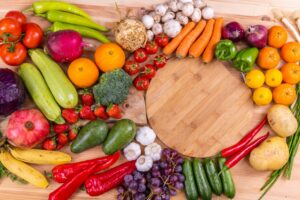
One of the strongest parts of the new guidelines is the direct emphasis on eating real, minimally processed foods and reducing highly processed foods.
So yes, encouraging people to eat more real food is a strong message, but it’s not new. Every previous set of Dietary Guidelines has implicitly encouraged whole, minimally processed foods. The difference now is how it’s being explicitly framed, and what other recommendations are emphasized along with it.
Marion Nestle said in her Johns Hopkins Public Health interview that this was one of the parts she genuinely liked. She and other public health advocates have argued for years that eating relatively unprocessed food is foundational to health.
And the research backs it up. Diets high in ultra-processed foods can lead people to consume significantly more calories, sometimes 500-1,000 extra per day, without even realizing it. That extra intake contributes to rising obesity rates, which are projected to approach nearly half of U.S. adults by 2030.
Protein
The new guidelines emphasize increasing protein intake. Protein does support muscle mass, and it becomes especially important as we age, but Marion Nestle pointed out that Americans already consume roughly twice the protein they need. So when the recommendation is to eat more protein, we have to ask: More compared to what? For who? And from which sources?
Without that context, the message becomes oversimplified. For many people, more protein automatically translates to more meat. And that’s where the bigger issue lies.
As we discussed in Stronger for Longer, muscle preservation doesn’t happen from protein alone. It requires movement. Strength training stimulates muscle, and protein supports it. You need both.
If the focus is only on increasing intake without pairing it with movement, the message becomes incomplete.
Saturated Fat
The guidelines still recommend keeping saturated fat under 10% of total calories, yet they emphasize red meat and full-fat dairy. That creates a contradiction. You can’t encourage higher intakes of foods rich in saturated fat while also telling people to limit saturated fat without explaining how to balance the two.
A more practical approach would emphasize protein sources lower in saturated fat, like plant-based proteins, seafood, legumes, and lean options. Otherwise, people are left trying to reconcile two recommendations that don’t quite line up.
Whole Grains
The inverted pyramid visually places whole grains at the bottom. [Marion Nestle described this as one of the more puzzling elements of the new guidelines.] There is substantial evidence supporting largely plant-based eating patterns, like the Mediterranean diet, which include whole grains and are associated with better long-term health outcomes.
Downgrading the entire grain category because refined grains are overconsumed risks throwing out the benefits of fiber-rich whole grains. Many Americans already fall short on fiber intake, and whole grains help close that gap.
The graphic may have flipped, but the evidence supporting fiber-rich, plant-based eating patterns did not.
Fats and Alcohol
Two other areas in the guidelines deserve clarification: essential fats and alcohol.
Let’s start with fats.
Omega-3 fatty acids primarily come from seafood and certain plant sources, not from butter or beef tallow. Olive oil is a healthy fat, but it isn’t a significant omega-3 source either.
If the concern is that Americans lack essential fatty acids, then the guidelines should point toward foods that actually provide them. Otherwise, people are left assuming certain fats are interchangeable when they’re not.
The same issue shows up in the alcohol recommendations. The updated guidelines encourage limiting alcohol but do not clearly define specific intake amounts as previous guidelines did. [Nestle described this as a softening of prior recommendations.]
When it comes to alcohol and health risk, specificity helps people make informed choices. “Limit” can mean very different things to different people. Vague language leaves too much room for interpretation.
The Bigger Picture
The flipped and outdated pyramid grabs attention. But underneath the graphic, the fundamentals haven’t changed as much as it might seem.
We agree with the real food message, but we question the inconsistency between increasing red meat and full-fat dairy while limiting saturated fat. We also question visually downgrading whole grains when fiber intake is already low and plant-based patterns continue to show benefits.
Nutrition guidance will continue to evolve. Graphics will change. Headlines will shift. But eating whole foods, getting enough fiber, being mindful about protein sources, and staying active are habits that have stayed relevant for years.
And those don’t flip overnight.
Ready to Take the Next Step?
Before reacting to the latest nutrition headline, take our free Top Inner Roadblocks to Weight Loss Success Quiz to understand what might actually need your attention.
For a deeper look at how protein and strength work together, revisit Stronger for Longer.
Sources:
- Loughrey K. Happy Life at a Healthy Weight: Creating a Shame Free, Healthy Relationship with Food and Life. Authentic Wellness Publishing Company, LLC; 2024.
- Nestle M. Marion Nestle on the New Dietary Guidelines. 2026. https://youtu.be/RPt2Tl9e1d0?si=_jTSygByhcHnox1O.
- U.S. Department of Agriculture, Health. Eat Real Food. Eat Real Food. 2025. https://realfood.gov/.
- National Institutes of Health. Eating highly processed foods linked to weight gain. National Institutes of Health (NIH). 2019. https://www.nih.gov/news-events/nih-research-matters/eating-highly-processed-foods-linked-weight-gain.
- Healy M. News: By 2030, nearly half of all U.S…. (The Los Angeles Times) – Behind the headlines – NLM. NCBI. 2019. https://www.ncbi.nlm.nih.gov/search/research-news/7943/.

Zhana Ivanova
University of Maryland – Nutrition and Food Sciences

Kay Loughrey, MPH, RDN, LDN Transformational Speaker, Breakthrough Coach, Nutritionist-Dietitian
Thank you for reading this blog post. Join the Sweet Life Newsletter to stay up to date on blog posts, events, and other ways to live your best sweet life.
Kay Loughrey, MPH, RDN, LDN is a licensed Nutritionist-Dietitian and a weight loss coach with 30+ years of experience in helping people lose weight and develop healthier relationships with food. She coaches her clients nationwide providing weight loss planning, video check-ins, and more. Schedule your free consultation.